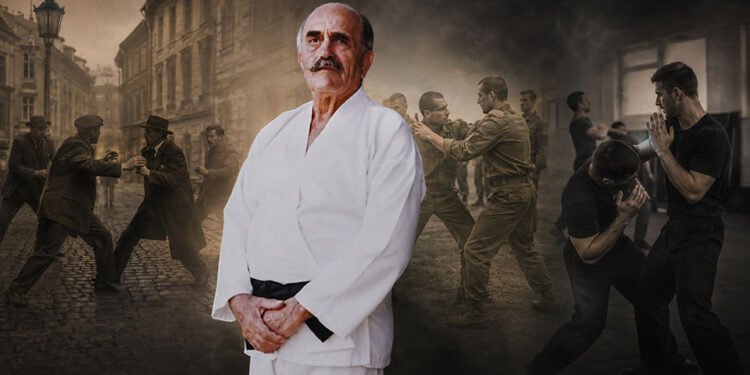
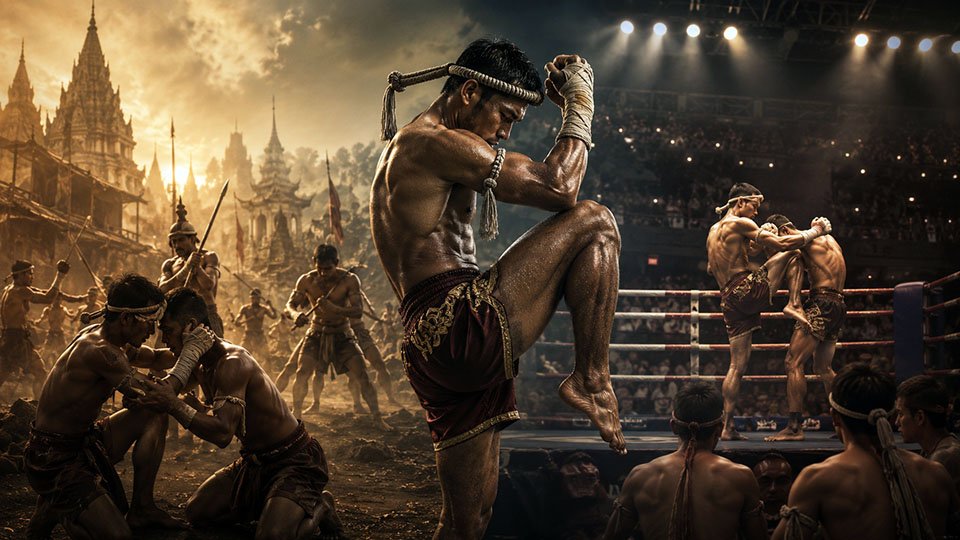
Muay Thai grew from older Siamese fighting systems shaped by warfare, regional traditions and royal patronage before being reorganized into a regulated combat sport. Its evolution from Muay Boran and rope-bound contests to Bangkok stadiums and global competition shows how the discipline changed its rules and institutions while preserving a distinct Thai martial identity.
Muay Thai did not begin with stadium lights, championship belts or five-round fights. Its foundations lie in older Siamese systems of armed and unarmed combat, shaped by warfare before being reorganized across centuries into a regulated competitive discipline.
That transformation was neither clean nor linear. Early records are incomplete, regional traditions developed differently, rules changed with political modernization, and some of the best-known stories survive partly through oral tradition. What eventually emerged was a sport built around punches, elbows, knees, kicks and clinch work while retaining rituals, music and symbols that connect the modern ring to Thailand’s martial past.
The history of Muay Thai is therefore not simply the story of an old fighting method becoming popular overseas. It is the history of a combat system repeatedly changing its structure without abandoning the cultural framework around it.
Before Muay Thai Became a Sport
The label Muay Boran, literally “ancient boxing,” is often used as though it describes one unified martial art that existed unchanged for centuries. The history is more complicated.
Related Post
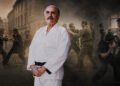
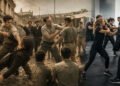
The Royal Thai Consulate-General in Shanghai describes Muay Boran as a modern umbrella term for hand-to-hand methods practiced before Thai boxing was codified as a national combat sport around 1930. It places their military roots in roughly the 13th century while noting that no single founder can be established.
That distinction matters.
What preceded today’s sport was a collection of fighting practices shaped by military requirements, regional instruction and local transmission. Soldiers needed options when a sword, spear or other weapon was lost or became unusable at close range. Striking, balance disruption, defensive movement and grappling therefore existed alongside weapon systems rather than as an isolated ring discipline.
Thai martial traditions also developed in proximity to Krabi Krabong, the weapon-based system associated with swords, staffs and other battlefield arms. In that environment, the body became another set of weapons: hands for striking, elbows at close distance, knees from the clinch, legs for kicking and the head in techniques that would later disappear from regulated Muay Thai.
Modern promotional language often reduces this evolution to the familiar phrase “Art of Eight Limbs.” The earlier fighting framework could be broader. Muay Boran traditions include references to a ninth weapon—the head—while some classifications extended the arsenal further through throws and additional body mechanics. The present eight-limb structure reflects what survived the transition into organized competition.
Sukhothai and the Military Foundations of Thai Boxing
The Sukhothai Kingdom, established in the 13th century, occupies an important place in accounts of early Siamese martial development.
The International Federation of Muaythai Associations places the roots of the discipline in the early kingdoms of Sukhothai and Ayutthaya, where soldiers relied on fists, elbows, knees and shins when armed combat collapsed into close quarters.
Martial training during this period was tied to military readiness rather than spectator competition. Fighting skill belonged to the same practical environment as archery, weapons work, horsemanship and battlefield conditioning.
Royal involvement also became part of the tradition surrounding Siamese fighting. Later accounts describe princes and commanders receiving combat instruction as preparation for military and political responsibility. This relationship between martial proficiency and royal patronage would continue under later dynasties, eventually helping boxing move from military practice into public culture.
The surviving evidence does not support a simple claim that modern Muay Thai already existed in its present form during Sukhothai. What can be traced is a much older Thai tradition of organized empty-hand fighting that eventually contributed to the sport recognized today.
Ayutthaya Changed the Setting
Under the Ayutthaya Kingdom, martial practice increasingly moved beyond the military sphere.
Warfare remained central to Siamese political life, but boxing also became associated with festivals, temples, public gatherings and royal events. Fighters could now demonstrate skill before spectators rather than only within military training.
This shift changed what fighting meant.
A battlefield system is built around survival. Public competition requires an opponent, a recognizable contest and an audience capable of understanding what it is watching. Once bouts became part of communal entertainment, martial ability acquired status beyond military usefulness.
Protective and ceremonial practices also became increasingly visible. Fighters wrapped their hands and forearms in cord in the practice generally known as Muay Kard Chuek. Mongkhon headbands and Pra-jiat armbands became associated with the fighter’s preparation and identity.
Royal patronage reinforced boxing’s position within Siamese society. King Prachao Sua, remembered as the Tiger King, became one of the figures most closely associated with the martial culture of the Ayutthaya period. Traditions surrounding his reign describe a monarch deeply involved with boxing and the development of elite fighters around the royal court.
The importance of this period is larger than any single royal story. By the end of Ayutthaya, Thai boxing was no longer only a practical response to losing a weapon. It had become a recognizable social practice.
Ayutthaya Falls, and Nai Khanom Tom Enters the Story
Ayutthaya was destroyed by Burmese forces in 1767. The destruction also erased a substantial part of the written record surrounding earlier Siamese martial practice, one reason the ancient history of Muay Thai contains gaps that later traditions cannot completely resolve.
From that rupture came the best-known figure in Muay Thai’s historical mythology: Nai Khanom Tom.
The traditional account places him among Siamese captives following Ayutthaya’s defeat. During a festival held by Burmese King Hsinbyushin in 1774, Nai Khanom Tom was selected to fight Burmese boxers.
Before competing, he performed what is remembered as a Wai Kru, paying respect to his teachers before entering combat. He is then said to have defeated a succession of Burmese opponents. The Thai diplomatic account of the story gives the number as 10 fighters and says the Burmese king eventually granted him his freedom.
The episode belongs to a part of Muay Thai history where documented fact and national legend overlap. Treating every detail as independently established would overstate what survives from the period.
Its cultural influence, however, is clear.
Nai Khanom Tom became a symbol of Thai martial skill, resistance and the relationship between a fighter and his teachers. His story also demonstrates something important about Muay Thai’s historical identity: ritual was not separate from fighting. Respect, preparation and combat existed inside the same practice.
Muay Boran Was Never One Style
Before national standardization, Thai unarmed fighting differed across regions.
Four traditions became particularly associated with the historical landscape: Muay Chaiya, Muay Korat, Muay Lopburi and Muay Thasao. Their distinctions involved stance, movement, preferred range and tactical emphasis rather than merely geographic naming.
Muay Chaiya, associated with southern Thailand, emphasized a compact structure, defensive positioning, counter-attacks, limb interception and close-range protection. Its Yang Sam Khum footwork used triangular movement to manage direction while maintaining defensive readiness.
Muay Korat, from the northeast, developed a reputation for forward pressure and forceful striking. Wider movement and powerful punches became associated with its approach.
Muay Lopburi, linked to central Thailand, emphasized mobility, deception and quick straight attacks. Speed mattered more than simply overwhelming an opponent through physical pressure.
Muay Thasao, associated with the north, became known for agile movement, rapid kicking and distance changes.
At the turn of the 20th century, King Rama V’s efforts to formalize Thai martial practice brought regional masters into greater contact. The Royal Thai Consulate’s historical account identifies Lopburi, Korat and Chaiya among the styles recognized during this period, with Thasao emerging as another northern tradition.
Modern Muay Thai would eventually absorb elements from this broader landscape. Standardization created a common sport, but it also narrowed the technical range permitted inside competition.
Rama V and the Move Toward a National Fighting Culture
The establishment of the Rattanakosin Kingdom in 1782 created another political setting for Siamese boxing.
Under the Chakri dynasty, martial practice increasingly became connected to physical education, public competition and national identity. This process accelerated during the reign of King Chulalongkorn, Rama V, from 1868 to 1910.
Regional fighters were brought into royal tournaments. Accomplished practitioners could receive titles and recognition, allowing martial reputation to carry formal social status.
One such figure was southern fighter Plong Jumnongthong, associated with Muay Chaiya. After defeating a Korat opponent before the king, he received the title Muen Muay Mee Chue, traditionally translated as “Noble Fighter of Renown.”
Yet competition still looked very different from a contemporary stadium card.
Fighters could enter without modern weight divisions. Gloves had not replaced rope bindings. Formal judging systems were limited or absent. Contests took place in courtyards and other open spaces.
Even timekeeping followed another logic. One traditional method used a perforated coconut shell floating in water. As the shell filled and sank, the round ended.
What later became an internationally regulated sport was still operating through customary rules.
From Rope-Bound Hands to Boxing Gloves
The decisive structural break came during the early 20th century.
Traditional Muay Kard Chuek allowed fighters to bind their hands and forearms with hemp or similar material. Earlier combat practice also permitted techniques that modern rules would remove, including headbutts and forms of grappling incompatible with regulated stand-up competition.
As Siam modernized its institutions, boxing changed with it.
By around 1930, the older fighting systems had been reorganized into the sport increasingly recognized as modern Muay Thai. The Royal Thai Consulate’s comparison of Muay Boran and Muay Thai identifies several features of that transformation: regulation gloves, weight classes, five three-minute rounds and restrictions on techniques considered unsuitable for organized competition.
The change did more than improve safety.
It altered strategy.
A fighter operating without weight divisions, fixed rounds or point scoring approaches risk differently from someone competing under a standardized rulebook. Removing headbutts and certain throws changed clinch positions. Gloves affected punching, guarding and defensive choices. Timed rounds introduced pacing. Judges created a new reason to distinguish between damaging, controlling and ineffective attacks.
The human body remained the central weapon system. The environment around it had become regulated.
That is the point at which the history of Muay Thai becomes increasingly recognizable as the history of a modern combat sport.
Rajadamnern Gives Muay Thai a Permanent Stage
Modern regulation required physical infrastructure.
Bangkok’s Rajadamnern Stadium became one of the institutions that gave professional Muay Thai a permanent home.
Construction began during World War II, and the stadium opened in 1945. Its official history dates the first fight to December 23, 1945. A concrete dome followed in 1951, while Rajadamnern says it published an official professional Muay Thai rulebook in 1955.
This mattered because a stadium is more than a building.
It creates rankings, recognized champions, promoters, recurring competition and a place where reputations can be measured against an established hierarchy. Professional Muay Thai now had an institutional center rather than a rotating collection of festival grounds and temporary rings.
Rajadamnern also preserved elements that regulation had not erased: Wai Kru, live music, corner rituals and a distinct relationship between scoring, audience response and tactical pacing.
Modernity did not require Muay Thai to become culturally anonymous.
Lumpinee Creates a Rival Center of Power
A second Bangkok institution followed.
Lumpinee Boxing Stadium was established on December 8, 1956 and has been managed by the Royal Thai Army. Its original venue stood on Rama IV Road before the stadium moved to Ram Inthra Road in 2014.
For decades, Rajadamnern and Lumpinee formed the central competitive hierarchy of Thai stadium boxing.
Winning there carried meaning beyond collecting another victory. Fighters had to survive dense domestic competition, stylistic diversity and matchmaking structures that repeatedly placed high-level opponents against one another.
A stadium title therefore became a measure of position within the Thai system itself.
That environment would produce many of the fighters later associated with Muay Thai’s modern Golden Era.
The Golden Era Turns Style Into Identity
From roughly the 1980s through the 1990s, Bangkok stadium competition produced an unusually concentrated generation of elite fighters.
The period is commonly described as Muay Thai’s Golden Era, when stadium attendance, gambling markets, competitive depth and fighter activity created conditions for highly specialized tactical identities.
Those identities became part of Muay Thai’s vocabulary.
A Muay Femur fighter operates through timing, distance, balance, deception and countering. Samart Payakaroon became one of the archetype’s defining names.
A Muay Khao specialist builds pressure through clinch control and knees. Dieselnoi Chor Thanasukarn represented an extreme version of that approach, using height, endurance and repeated knee attacks to dominate close range.
A Muay Mat fighter emphasizes punching power, often combining heavy hands with low kicks and accepting exchanges that a more evasive technician might avoid. Muay Dteh specialists, by contrast, control range through kicking, repeatedly attacking the body, arms or head with the shin. Pressure defines Muay Bouk, whose practitioners advance continuously, force exchanges and sustain offense through high output.
These are not rigid classes. Elite fighters cross tactical boundaries. The terminology is useful because it reveals how Thai boxing culture reads combat: not merely through individual techniques, but through the strategic character of the person using them.
The Fight Begins Before the Bell
Muay Thai’s survival as a cultural practice becomes most visible in the minutes before contact.
Fighters perform the Wai Kru Ram Muay, a ritual that recognizes teachers, camp, family and the tradition surrounding the athlete. The Wai Kru expresses respect; the Ram Muay adds movement patterns that can reflect lineage, training environment or symbolic imagery.
IFMA’s account of Muay Thai history identifies the Wai Kru, Mongkhon and Pra-jiat among traditions carried into the contemporary sport.
The Mongkhon is worn on the head during the ceremonial period and removed before combat begins. The Pra-jiat is tied around the upper arm. Their meaning varies across camps and practitioners, but both connect competition to relationships extending beyond the individual athlete.
Music provides another layer.
Traditional bouts are accompanied by Sarama, performed by musicians whose tempo responds to the rhythm of the contest. The Pi Chawa carries the melodic line; drums and percussion establish pace. As exchanges intensify, the sound can accelerate with them.
Few major combat sports retain this degree of live ritual inside professional competition.
The result is a striking contradiction: Muay Thai modernized by adopting gloves, rounds, rankings and regulated rings, yet refused to strip away everything that preceded professional sport.
Muay Thai Leaves Thailand
International expansion followed several routes.
Thai fighters competed abroad. Foreign practitioners traveled to Bangkok. Japanese martial artists tested their systems against Thai boxers. European gyms absorbed low kicks, clinch work and Thai kicking mechanics into new training structures.
Cross-style encounters involving Kyokushin karate and Thai boxing became particularly important in Japan during the 1960s and 1970s. Kenji Kurosaki later developed Mejiro Gym in Tokyo, where Thai influence mixed with karate and Western boxing in the development of Japanese kickboxing.
Toshio Fujiwara became one of the best-known fighters to emerge from that environment. His success against Thai opposition helped challenge the assumption that stadium-level competition belonged exclusively to Thai athletes. The broader exchange later reached the Netherlands through figures including Jan Plas, contributing to a Dutch kickboxing system built around combinations of boxing, low kicks and high-pressure engagement. The development is traced in this history of Western involvement with Muay Thai.
Another confrontation became influential far beyond its original setting.
In 1988, American kickboxer Rick Roufus fought Thailand’s Changpuek Kiatsongrit in Las Vegas under modified rules. Roufus found early success with his hands, but Changpuek repeatedly attacked his lead leg with roundhouse kicks. The accumulated damage eventually ended the contest.
The bout acquired lasting instructional value because it made one technical difference impossible to ignore: fighters accustomed to above-the-waist kicking had to account for conditioned shin attacks to the thigh.
Low-kick defense became part of the international striking conversation.
MMA Gives Muay Thai Another Environment
The growth of mixed martial arts created another stage of adaptation.
Muay Thai could not simply be transferred unchanged into MMA. Wrestlers could attack the hips. Cage positioning altered clinch exchanges. Small gloves affected defensive choices. Extended upright clinching could expose a fighter to takedowns.
Even so, several Thai tools fitted the new environment with relatively little conceptual adjustment.
The round kick could damage the leg, body or head. Elbows remained effective at close distance. Knees offered offense from clinch positions. Posture control could disrupt an opponent while creating striking opportunities.
What changed was the surrounding problem.
A stadium Muay Thai fighter asks how to win an upright striking contest. An MMA athlete must use the same weapons while accounting for wrestling, submissions and ground position.
That distinction explains why Muay Thai became a major part of MMA striking without turning MMA into Muay Thai.
Modern Promotions Change the Tempo Again
The sport continues to reorganize itself.
Traditional stadium Muay Thai is strongly associated with five-round competition, conventional boxing gloves, scoring conventions that reward balance and effective technique, and a tactical rhythm in which early rounds can differ considerably from the decisive middle stages.
Some international formats have moved in another direction.
ONE Championship’s official Muay Thai rules use 4-ounce gloves. Non-title contests run for three three-minute rounds, while world championship bouts extend to five.
The structural consequences are visible.
Smaller gloves change defensive coverage. Shorter non-title contests leave less time for extended tactical development. Fighters have fewer rounds available to establish patterns before needing to win exchanges.
That does not make one version more authentic than another by itself. It creates different incentives.
Muay Thai has been changing its competitive environment for centuries. The modern argument over three rounds, smaller gloves and broadcast-oriented pacing belongs to the same longer history of adaptation.
Women Enter Rings That Once Excluded Them
Some changes have been institutional rather than technical.
For decades, traditional restrictions prevented women from competing inside Thailand’s two most famous stadium systems. That barrier began to collapse in the early 2020s.
Lumpinee opened its ring to women’s competition, while Rajadamnern followed with its own structural changes. The Rajadamnern Stadium chronology records its first women’s bout on August 5, 2022, when Aida Looksaikongdin faced Zahra Venum Muay Thai.
The shift mattered because exclusion from a prestigious venue affects more than where someone fights.
Stadium access determines championship opportunities, visibility, matchmaking, commercial value and historical recognition. Opening those rings changed who could participate in the institutions used to define elite Thai competition.
It also exposed a larger tension inside Muay Thai: preserving tradition does not require preserving every restriction inherited from the past.
Recognition Without Olympic Inclusion
Muay Thai’s international administrative structure also changed.
IFMA, founded in 1993, developed an international amateur framework involving national federations, standardized competition and anti-doping structures. The organization’s expansion eventually led to recognition by the International Olympic Committee.
In June 2021, the IOC Executive Board proposed full recognition for IFMA, after the federation had held provisional recognition since 2016. Full IOC recognition followed through the Olympic movement’s approval process that year.
Recognition and inclusion in the Olympic Games are not the same thing.
Muay Thai’s IOC status places its international federation inside the recognized sports framework. It does not mean the discipline automatically appears on the Summer Olympic program.
That distinction is important because the sport’s global institutional future remains separate from the professional stadium culture that developed in Thailand.
Both now exist at once.
What Muay Thai Kept While Everything Else Changed
The history of Muay Thai can be read through a sequence of removals and additions.
Battlefield necessity gave way to public competition.
Regional systems were drawn into a national structure.
Rope bindings disappeared from regulated contests.
Headbutts and other techniques were excluded.
Weight divisions reduced physical mismatches.
Rounds created pacing.
Judges formalized victory.
Rajadamnern and Lumpinee turned reputation into institutional hierarchy.
International gyms carried Thai mechanics overseas.
Kickboxing absorbed them.
MMA adapted them.
Modern promotions altered gloves and fight length again.
Women entered stadium rings that had excluded them.
An international federation gained IOC recognition.
Yet a fighter can still enter a professional ring wearing a Mongkhon, perform the Wai Kru Ram Muay, hear live traditional music and then attack with the same basic weapons—fists, elbows, knees and shins—that define the sport’s identity.
That continuity is what makes the history of Muay Thai difficult to reduce to a single origin story.
The modern sport is not an untouched battlefield system preserved inside ropes. Nor is it simply Western boxing modified with elbows and kicks.
It is the product of repeated negotiation between combat effectiveness, regulation, royal patronage, regional technique, public entertainment, cultural ritual and commercial competition.
The rules changed.
The arena changed.
The institutions changed.
What survived was the central problem Muay Thai has always asked the fighter to solve: how to control distance, balance and damage with the body while another trained person is trying to do the same.