Muay Thai in Indonesia now runs through provincial competition, private gyms, professional cards and international pathways that can carry fighters as far as Thailand’s major stadium circuits. Athletes such as Elijah Hinzman and Edwin Pratama Putra show that the route exists, but sustaining it still depends on coaching depth, frequent competition, financial support and adaptation to higher-level opposition. The next test is whether Indonesia can turn individual breakthroughs into a repeatable development system.
An Indonesian Muay Thai fighter no longer has to follow one route into competition.
One athlete may come through a provincial program and enter the national amateur system. Another develops inside a private gym, takes club fights, moves onto professional cards and looks for opponents abroad. A third builds enough experience to cross into Thailand, where the level of opposition, frequency of competition and visibility can change the direction of a career.
Those paths now coexist.
Muay Thai in Indonesia operates through an amateur structure tied to national sport, professional sanctioning, private fight gyms, regional events and commercial combat platforms. Thailand remains the most important external benchmark, but reaching Bangkok is not simply a matter of buying a plane ticket and finding a camp.


A fighter needs rounds, coaching, matchmaking, money and the ability to adapt when the environment changes.
That is the system taking shape behind Indonesian Muay Thai.
One Sport, Several Competitive Structures
The institutional side of Indonesian Muay Thai is easier to see than it was a decade ago.
Pengurus Besar Muaythai Indonesia operates the national pathway connected to multi-sport competition and international amateur Muay Thai. Its official site records Indonesia becoming a permanent member of the International Federation of Muaythai Associations in 2023. PBMI also fields athletes through domestic championships and international delegations.
That system includes the Pekan Olahraga Nasional.
At PON XXI Aceh–North Sumatra in 2024, athletes competed for provincial teams rather than individual gyms. East Java finished as the overall Muay Thai champion, illustrating how the discipline has entered the same provincial performance structure that shapes many established Indonesian sports.
The scale continued to expand in 2026. PBMI staged the Indonesia Muaythai Championship in Bekasi after holding certification sessions for coaches, referees and judges with IFMA personnel. The pre-event program projected roughly 500 competitors; a later KONI East Java report recorded 514 athletes at the championship.
That number matters less as a headline than as an indication of depth. A national system cannot depend on a small circle of established names. It needs enough athletes to create selection pressure across regions, ages and weight categories.
The professional side follows another structure.
WBC MuayThai Indonesia received its national mandate in May 2023, with Urgyen Rinchen Sim appointed chairman of the national committee. Its role is sanctioning rather than promoting events: approving contests under its framework, assigning officials, applying safety protocols and developing rankings and championship pathways.
The distinction is important.
An athlete winning an amateur provincial medal, taking a WBC-sanctioned professional title and appearing on a commercially promoted card may be described broadly as an Indonesian Muay Thai fighter, but those achievements come through different systems.
Understanding the sport requires separating them.
PON Gives Fighters One Ladder. Professional Muay Thai Gives Them Another.
The amateur pathway provides structure.
An athlete can represent a district or province, move through qualification, compete at national level and become eligible for international selection. IFMA rules also create a standardized environment covering competition procedures, scoring, medical requirements and officiating.
Professional Muay Thai is less linear.
There is no single Indonesian league through which every fighter must advance. Opportunities can emerge through gyms, managers, independent promoters, sanctioned title events and overseas contacts.
The WBC MuayThai Indonesia Festival, for example, placed domestic fighters into national-title contests under an internationally connected sanctioning structure. That creates a different form of progression from collecting provincial medals.
Commercial platforms add another layer.
BYON Combat has built a large audience around crossover combat and what it currently describes as kickstriking, alongside boxing and other formats. Its events therefore should not be treated as interchangeable with traditional Muay Thai competition. They do, however, give Indonesian strikers another place to build visibility, appear in international matchups and operate inside a commercial fight product.
For a fighter, these routes can overlap.
For an editor, coach or manager, they should not be confused.
A medal, sanctioned championship, commercial title and Bangkok stadium appearance measure different things.
The Gyms are Where Those Systems Meet
Institutions can schedule tournaments. Promotions can book fights. Neither can produce skilled athletes without places capable of training them.
That makes the gym one of the most consequential parts of Muay Thai in Indonesia.
Bali occupies a distinctive position because local fighters share training space with a continuous flow of international practitioners and professional athletes.
Bali MMA says it was founded in Canggu in 2014 and now operates programs across Muay Thai, MMA, Brazilian jiu-jitsu and fitness. Its roster and visiting population put Indonesian athletes inside a training environment that is not limited to domestic partners.
Soma Fight Club developed another professional training base in the same area. ONE Championship reported in 2021 that former ONE athlete Gianni Subba had become a co-owner of the gym, where he moved increasingly into coaching.
The significance is not the number of premium facilities in Canggu.
It is access.
A fighter who previously needed an overseas camp to encounter athletes from different competitive backgrounds can now find some of that variation inside Indonesia. It does not reproduce Bangkok’s stadium system, but it changes what can be developed before an athlete leaves the country.
Bali also contains smaller competitive layers.
Ubud Muay Thai’s Backyard Fight began as a community event designed to give developing fighters an accessible first step into competition. Its inaugural card matched athletes from several local gyms across weight divisions.
Those bouts are far removed from Rajadamnern.
That is precisely why they matter.
Nobody should need a Bangkok booking for their first meaningful ring experience.
Jakarta and Java Serve a Different Function
Bali’s international traffic makes it visible, but Indonesian Muay Thai cannot be understood through Canggu alone.
Jakarta and the provinces across Java supply another part of the infrastructure: urban gyms, provincial teams, coaching networks and athletes moving through national competition.
Zealot Muay Thai was among the earlier Jakarta gyms built around both community training and fighter development. Founder Jeremias Abraham Luhukay established the operation during the early 2010s before expanding beyond the capital. Contemporary reporting described the gym as serving beginners as well as athletes pursuing professional competition.
The PON results add another layer. East Java’s overall victory in 2024 did not come from a destination-gym model. It reflected provincial athlete development aimed at medal competition.
West Java has produced fighters who crossed from domestic competition into Thailand.
One of them is Edwin Pratama Putra.
That movement—province to national competition to Thai cards—is where the structure becomes visible through an individual career.
Edwin Pratama Putra Shows One Version of the Thailand Route
Edwin comes from Sumedang, West Java. His professional record offers a compact example of how an Indonesian fighter can accumulate experience across different Thai platforms.
Muay Thai Records lists a decision defeat at Thai Fight League 87 in October 2025, followed by two victories at Max Muay Thai in Pattaya in early 2026. He stopped Arthit SukiMuayThai in the third round in February after defeating Yoktamin Sor Biwpawasud Chonburi on points the previous month.
Then came Rajadamnern.
Edwin made his Rajadamnern World Series debut against Rawad Saab at RWS 192 on May 2, 2026. Saab stopped him in the second round.
The loss does not erase the pathway.
It clarifies it.
Indonesian success in Thailand cannot be measured only by whether someone receives an invitation. The more demanding question is what happens once the fighter reaches that level.
Can the athlete win consistently against international opposition?
Can the gym prepare someone for different rhythms and scoring environments?
Can management secure another opportunity after a defeat?
Can the fighter afford enough preparation to return?
Those questions begin after the booking, not before it.
Elijah Hinzman Reached International Level Through a Different Route
Elijah William Hinzman’s trajectory does not mirror Edwin’s.
He represents both Indonesia and a deep connection to Thai competition. By 2026, that experience had placed him on two significant international stages.
Hinzman made his RWS debut on March 7, 2026, according to Rajadamnern World Series appearance records.
Three months later, he produced Indonesia’s strongest result at the IFMA World Championships.
Elijah won silver in Kuala Lumpur in June 2026, an achievement KONI described as a milestone for Indonesian Muay Thai. KONI East Java likewise recorded the medal as Indonesia’s best result in its IFMA World Championship history.
His year illustrates another point about the ecosystem.
Thailand is important, but Bangkok is not the only definition of international success.
The IFMA tournament system and professional stadium circuit run in parallel. A fighter may participate in one, the other, or both.
That creates more possible careers—but also demands greater clarity about what each record means.
The Road to Thailand is a Technical Transition
Going from an Indonesian tournament to a Thai professional card is not simply an increase in opponent quality.
The competitive environment changes.
IFMA publishes detailed regulations governing scoring, equipment, officiating, competition format and athlete safety. Its guidance states that judges score legal Muay Thai skills that land effectively on a valid target, with force and effect becoming relevant when separating closely matched athletes.
Professional Thai competition can place an athlete in a different setting: another round structure, less protective equipment, unfamiliar refereeing habits, new opponents and a match pace shaped by the particular promotion.
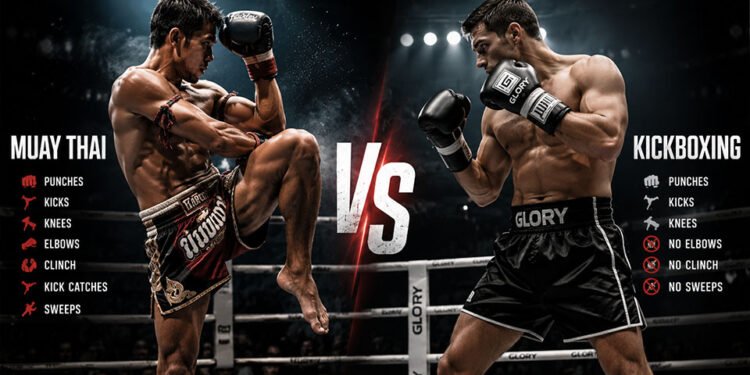
A boxer with heavy hands cannot assume punching volume will solve every problem.
A kickboxer cannot treat the clinch as a brief interruption.
A technically competent amateur still has to learn what happens when elbows, knees, balance, sweeps, ring positioning and sustained physical contact become central to the contest.
This is where exposure matters.
Thailand gives Indonesian fighters something that cannot be replicated through pad work alone: repeated competition inside an environment where Muay Thai is not a secondary discipline.
The objective is not to imitate every Thai fighter.
It is to understand the sport at the speed and depth demanded by its most mature competitive market.
Indonesia is Also Trying to Reduce the Technical Distance at Home
The movement does not run only outward.
In August 2026, PBMI brought four IFMA personnel into its certification program for referees, judges and coaches before the Indonesia Muaythai Championship. The sessions covered regulation, scoring, technical development and international standards.
That work is less visible than a knockout clip.
It may have greater long-term value.
Athlete development becomes unstable when fighters train under one interpretation of the rules, compete under another, then discover a third standard abroad.
Better officiating does not merely produce cleaner tournaments. It teaches coaches what is rewarded, gives competitors clearer feedback and reduces the distance between domestic preparation and international competition.
The same applies to matchmaking.
A fighter does not improve simply by collecting wins. The level, style and experience of the opponent determine what those rounds teach.
Money Remains Part of the Pathway
Thailand is geographically close to Indonesia. A serious campaign there is still not cheap.
Flights are only the beginning.
A fighter may need accommodation, camp fees, food, local transport, recovery, medical requirements and enough time away from regular work to prepare properly. Professional athletes without institutional support must find that money through purses, private sponsors, gym support, management or personal income.
The financial problem becomes sharper when a fighter needs several Thai appearances rather than one.
One bout can provide experience.
A career requires continuity.
That distinction explains why commercial visibility matters even when the event itself does not operate under traditional Muay Thai rules. A larger audience can improve a fighter’s sponsorship proposition. It can also attract managers and promoters.
Visibility, however, should not be mistaken for technical development.
Followers cannot replace clinch rounds.
A viral knockout cannot substitute for stronger opposition.
Commercial value and competitive quality can support each other, but they remain separate measurements.
The Next Measure is Conversion
Indonesia already has Muay Thai athletes.
It has provincial competition.
It has national championships, professional sanctioning, private gyms, local cards and fighters reaching international stages.
The more useful question is how efficiently those pieces connect.
How many provincial standouts move into sustained professional careers?
How often can promising athletes compete without waiting months between bouts?
How many gyms can prepare fighters for full-rules international opposition rather than domestic success alone?
How many Indonesian athletes can reach Thai stadiums, return after defeat and eventually win there consistently?
Hinzman’s IFMA silver medal shows that an Indonesian athlete can reach a world championship final. Edwin’s progression from Thai Fight League and Max Muay Thai to RWS shows that a domestic fighter can enter the Bangkok stadium pathway. Bali’s gyms provide another kind of access, while PON and national championships keep expanding the competitive base.
None of those developments alone defines the state of Muay Thai in Indonesia.
Together, they show where the sport is being built.
The decisive stage comes next: turning participation into deeper competition, isolated international appearances into repeatable careers, and the road to Thailand from an exceptional journey into a pathway more Indonesian fighters can actually travel.