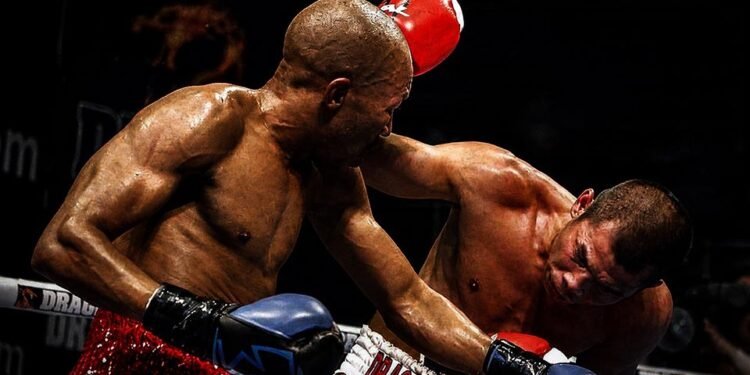
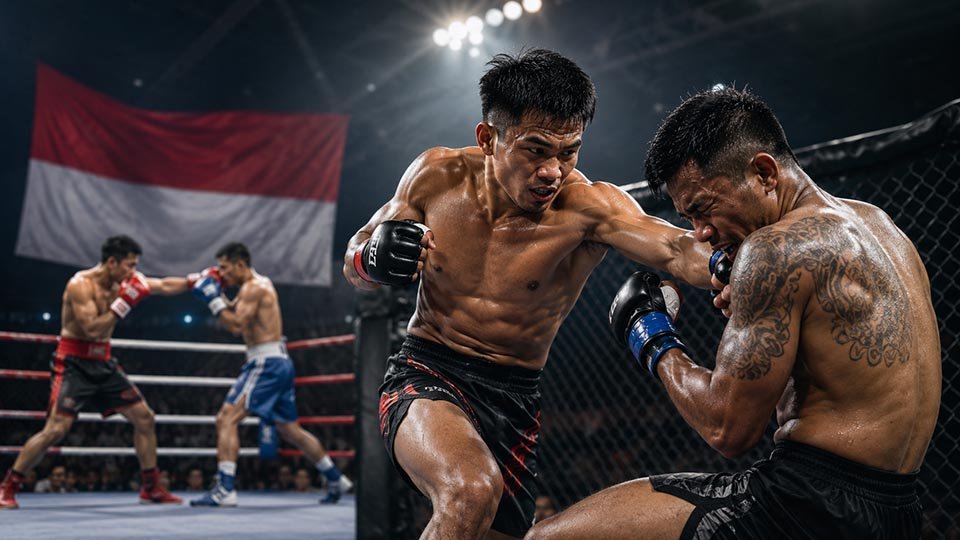
Indonesia already regulates professional sport through Kemenpora, discipline-specific bodies and public-event rules, but fighter records still sit across separate systems. The strongest case for a national combat sports commission is not to replace those institutions, but to create one independent layer for medical suspensions, licensing, insurance and eligibility that follows an athlete from one promotion or sanctioning body to the next.
Indonesia already has sports law, professional-athlete rules, sanctioning bodies and police oversight. What it does not have is one independent institution capable of seeing a fighter’s medical suspension, eligibility and regulatory history across boxing, MMA and other combat disciplines. That is where the case for a national commission becomes strongest.
Indonesia does not lack combat-sports regulation.
It lacks a single place where several critical pieces of it meet.
The government abolished the Badan Olahraga Profesional Indonesia, or BOPI, through Presidential Regulation No. 112 of 2020. BOPI had provided a central government layer for professional sport, including recommendations connected with competition administration. After its dissolution, then-sports minister Zainudin Amali said Kemenpora would absorb necessary functions cautiously because government involvement in professional sport could become intervention if it went too far.


Six years later, Indonesia has not rebuilt BOPI under another name.
Nor has professional sport remained in the regulatory position it occupied in 2020.
Law No. 11 of 2022 on Sports replaced the previous national sports law, and Kemenpora introduced another important layer in April 2026 through Ministerial Regulation No. 9 of 2026 on the Sports Industry. The regulation is currently in force and expressly covers professional sport alongside sports-business licensing and supervision.
The question, then, is no longer whether Indonesia needs rules.
It is whether combat sports need one institution responsible for the risks that existing organizations cannot manage separately.
The 2026 Rules Closed Part of the Gap
Any argument for a new combat sports commission has to begin with what Indonesia already regulates.
Under the 2026 framework, a professional athlete must satisfy competition history, employment and medical requirements. The medical condition is evidenced through a health certificate from a doctor appointed by the relevant national sports organization. Professional contracts must cover rights and obligations, pay, bonuses, benefits, insurance, duration and dispute resolution. The regulation also addresses professional championships and risk-based business supervision.
That is a significant development.
It means a national commission would not be starting from an empty legal field. Kemenpora already has a stronger professional-sports framework than it did immediately after BOPI disappeared.
The missing issue is narrower.
A doctor can certify one athlete. A federation can supervise its own competition. A promoter can hold the required business permissions. Police can determine whether a public event receives the necessary crowd permit.
None of those functions automatically creates a national combat-sports record that follows a fighter from one sanctioning environment to another.
MMA Shows That One Commission Is Not Needed for Everything
Indonesian MMA provides an argument against excessive centralization.
The amateur side now operates through a different structure. In April 2025, the International Mixed Martial Arts Federation recognized IBCA as Indonesia’s member federation. IMMAF said an agreement formalized in November 2023 gave IBCA responsibility for amateur development while KOBI continued in the professional space.
That division can work without a government commission choosing MMA champions, writing every technical rule or controlling amateur development.
A central body should not duplicate what a competent discipline organization can already do.
Professional MMA still needs people who understand MMA to regulate MMA.
Boxing Makes the Opposite Case
Professional boxing reveals the weakness of relying entirely on separate organizations.
Indonesia has long operated with several boxing bodies rather than one exclusive commission. When DTI was established in 2022, its leadership entered an environment already containing KTI, ATI, KTPI and FTPI, among others. DTI itself said it intended to work with the existing professional-boxing organizations rather than replace them.
Multiple commissions do not automatically mean unsafe boxing.
They do create a coordination problem.
One organization may sanction the fighter this month and another may oversee the next appearance. Rankings can remain separate. Administrative records may sit in different systems. A medical suspension is only as effective as the ability of the next commission to see and respect it.
That is where institutional competition stops being an internal boxing issue and becomes a fighter-safety question.
The Strongest Case Is a National Suspension Registry
A modern combat sports commission would be most useful if it controlled information that should never be fragmented.
Consider a fighter stopped after repeated head strikes.
The supervising body may impose a medical suspension. That restriction protects the athlete only if another promoter, commission or discipline can identify it before approving the next bout.
International practice shows how such coordination can work. The Association of Boxing Commissions requires member commissions to recognize medical and administrative suspensions imposed elsewhere. Its MMA registry criteria call for fighter records to include medical and disciplinary suspensions, dates, bout histories and ordered medical tests.
Indonesia does not need to copy the American system.
It does need to solve the same information problem.
A national fighter identification number, cross-discipline suspension database and shared record of serious medical restrictions would create protection without forcing every sport under identical technical rules.
That may be more valuable than another title-sanctioning organization.
Matchmaking Also Needs a Neutral Backstop
Medical information is only part of the problem.
Sanctioning bodies decide whether contests are acceptable. Promoters need bouts. Fighters need work. Broadcasters need cards to remain intact.
Those interests can collide.
An independent commission could establish minimum criteria requiring a documented review of experience, recent stoppages, inactivity, weight movement and current medical status before a professional contest is approved.
It would not need to choose the opponent.
Its job would be to ask whether the proposed matchup crosses a minimum safety threshold.
That distinction matters because the regulator should not become the matchmaker.
It should be able to tell one no.
A Commission Should Not Become Another Promoter Gatekeeper
Rebuilding BOPI exactly as it existed would solve one problem by recreating another.
Central control can produce consistency, but additional approvals can also slow legitimate events, duplicate federation work and create another institution that promoters must navigate before opening the doors.
The concern is not theoretical. When BOPI was dissolved, Kemenpora itself warned against entering too deeply into professional-sport administration and said it would consult federations and competition operators before deciding how former responsibilities should be handled.
Indonesia’s current rules already give the state a role in professional-sports policy and business supervision. The 2026 regulation also allows administrative sanctions where sports businesses breach required standards, including cases involving health and safety risks.
Another commission therefore needs a precise mandate.
It should not own rankings.
It should not decide who becomes national champion.
It should not control broadcast deals, dictate commercial matchmaking or replace KOBI, IBCA, boxing commissions and other technical bodies.
Those functions belong closer to the disciplines themselves.
Police Permission Is Another Job Entirely
A national commission would not eliminate the public-event approval layer.
Police assess public security.
A combat sports regulator should assess whether fighters can safely and legitimately compete.
Combining both would confuse two different forms of authority.
What Indonesia Actually Needs
The strongest model is not a super-federation.
It is an independent national combat sports safety and licensing layer with jurisdiction over issues that must remain consistent regardless of discipline or promoter.
Its core responsibilities could be limited to fighter identification, medical suspensions, serious injury records, minimum pre-bout clearance, professional eligibility, insurance verification, recognition of disciplinary restrictions and a common database accessible to authorized sanctioning organizations.
Sport-specific bodies would continue handling technical rules, rankings, championships, referee development and discipline-specific competition.
Kemenpora would retain government policy and professional-sports oversight.
Polri would remain responsible for public-event permission.
Promoters would still build and finance the product.
The commission’s purpose would be different: making sure information does not disappear between them.
Indonesia Needs Coordination More Than Another Logo
Calling for a national combat sports commission sounds like an argument for more bureaucracy.
It does not have to be.
Indonesia has already moved toward tighter professional-sport regulation through the 2022 Sports Law and the 2026 industry framework. MMA has developed a clearer amateur-professional split. Boxing continues to operate through multiple commissions. Commercial fight events can also involve sanctioning structures outside those traditional systems.
The weakness appears where those structures intersect.
A knockout should remain visible when a fighter changes promoter. A medical restriction should survive a move from one sanctioning body to another. Insurance should be verified before the first punch, not discussed after an ambulance leaves. An athlete barred on safety grounds should not become eligible simply because the next event uses a different logo.
Indonesia does not necessarily need BOPI again.
It needs one authority that can answer a narrower question every time a fighter is booked:
Is this person medically, legally and professionally cleared to fight — everywhere, not just here?