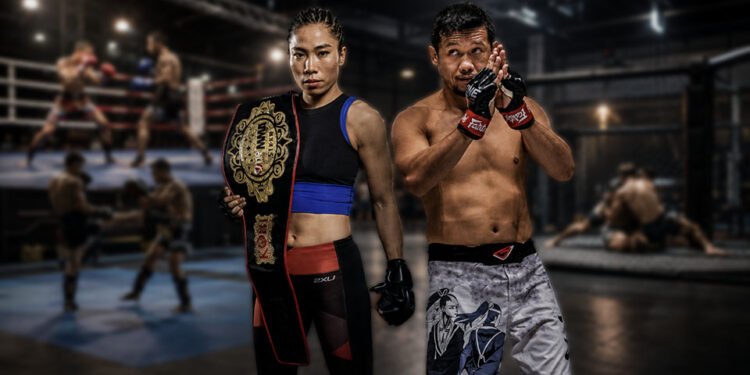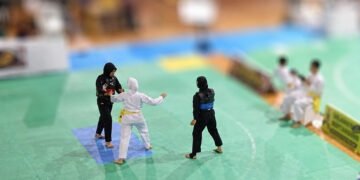
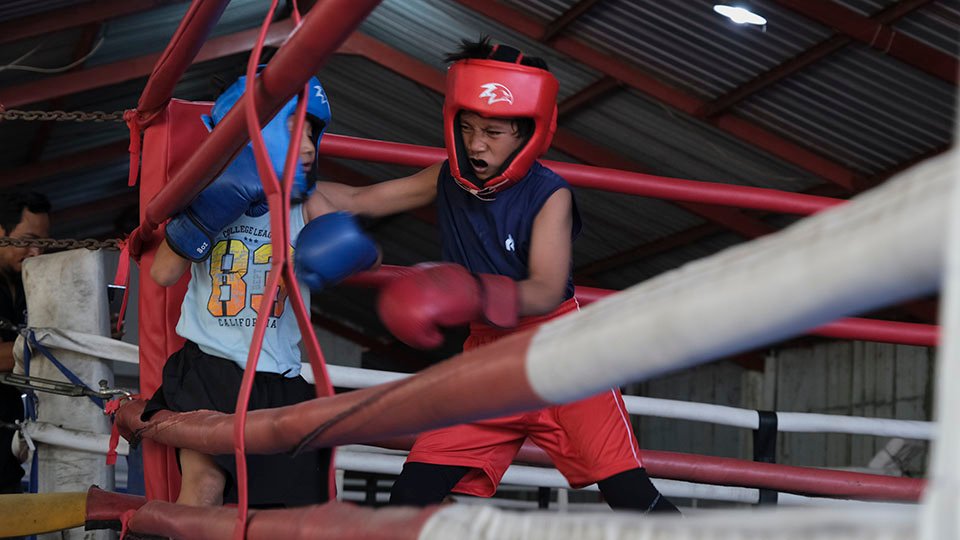
HAN Academy hosted around 200 athletes across boxing, kickboxing, MMA and cage grappling at Born to Fight Vol. 2 in Colomadu, Karanganyar, on September 6. The event brought together kids, junior, youth and senior competitors, giving fighters at different stages of development a chance to test their technique, conditioning and decision-making under competition pressure.
KARANGANYAR, Indonesia – Around 200 athletes competed in boxing, kickboxing, MMA and cage grappling at Born to Fight Vol. 2 in Colomadu, Karanganyar, on Sunday, September 6, giving fighters across several age groups an opportunity to test their preparation in competition.
Held at HAN Fighting Academy, the event began at 10 a.m. and continued into the evening, with divisions ranging from kids and juniors to youth and senior competitors.
The Arrow Sport Combat Organizer staged Born to Fight Vol. 2 in collaboration with HAN Fighting Academy. Bank Artha Graha Internasional (AGI) supported the event as a sponsor, while Voice of Fighter (VOF) and Tabooo.id took part as media partners.
Beyond individual results, the event gave developing athletes something regular gym sessions cannot fully reproduce: an opponent making independent decisions under the pressure of an official contest.

A Competitive Platform for Developing Fighters
Born to Fight Vol. 2 organizing committee chair Linda Darrow said the event was intended to provide newer athletes with practical competitive experience rather than focus solely on winning.
“Born to Fight kami hadirkan sebagai wadah bagi atlet-atlet baru untuk mendapatkan pengalaman bertanding. Mereka tidak hanya berlatih, tetapi juga perlu merasakan atmosfer pertandingan, menguji mental, dan mengukur kemampuan mereka di arena,” Linda said.
For fighters still building experience, entering an official contest changes the conditions in which their skills are tested.
Training allows an athlete to repeat techniques, stop after mistakes and make adjustments with direct input from a coach. Competition offers fewer opportunities to reset. The opponent is working to disrupt the same plan, while fatigue and the clock add pressure to every decision.
“Di sasana, atlet masih bisa mengulang teknik dan memperbaiki kesalahan. Saat bertanding, mereka harus mengambil keputusan dalam waktu singkat ketika menghadapi lawan yang juga memiliki strategi,” Linda added.
That difference makes competition an important part of development. Technique and conditioning remain fundamental, but fighters must also manage timing, emotion, uncertainty and tactical changes while the bout is unfolding.
Where Training Meets Resistance
A fighter can perform a combination successfully hundreds of times in training. Whether that movement remains effective against an unfamiliar opponent is a separate test.
During competition, athletes must process distance, pace and defensive reactions in real time. A tactical plan may need to change within seconds. Physical fatigue can also affect judgment as the contest progresses.
Those conditions make the ring, mat or cage more than a place to determine a winner.
They also provide information.
A fighter may discover that a technique practiced consistently in the gym breaks down under pressure. Coaches may identify problems with positioning, conditioning or decision-making that were less visible during routine sessions.
The result becomes part of the evaluation rather than the entire measure of progress.
Four Combat Formats on One Program
Born to Fight Vol. 2 featured four disciplines with different technical demands.
In boxing, competitors worked within a striking system built around punches, footwork, defense and distance control.
Kickboxing added kicks to the striking exchanges, changing range management and creating additional offensive and defensive decisions.
MMA required athletes to operate across several phases of combat, including striking, takedowns and ground fighting. Cage grappling concentrated on positional control, transitions and submission-oriented exchanges.
Although each ruleset posed different problems, all four required competitors to apply trained skills against active resistance.
That common element made the event relevant across disciplines: preparation had to work against someone trying to prevent it from working.
Competition Begins Early
The inclusion of kids, junior, youth and senior categories gave the event a broad developmental range.
For younger participants, competition can introduce elements that are difficult to recreate in ordinary practice. Athletes have to manage pre-bout nerves, follow officials’ instructions, understand competitive procedures and accept a result once the contest is over.
Those experiences become part of learning how to compete.
More experienced fighters face a different problem. Previous bouts may improve their ability to manage pressure, but each opponent presents a new set of technical and tactical variables.
Experience therefore does not remove uncertainty. It gives athletes more reference points for dealing with it.
What Happens Before the Bell
Spectators may see only several minutes of competition, but a fighter’s preparation takes place over a much longer period.
Training sessions build conditioning and technical habits. Coaches monitor weaknesses, prepare strategies and make adjustments before the athlete enters the competitive area.
Family members and gym communities can also form part of that process, particularly for younger fighters who depend on others for travel, schedules and continued access to training.
By the time an athlete reaches the ring or cage, the bout represents only the visible portion of a longer preparation cycle.
That distinction matters because a fight result records what happened during the contest, not everything that was required to reach it.
Colomadu Brings Different Parts of the Combat Community Together
HAN Fighting Academy served as more than the competition venue on Sunday.
Fighters arrived with coaches and teammates. Families followed younger athletes through the event, while combat-sports communities from several disciplines occupied the same competitive space.
With around 200 participants, Born to Fight Vol. 2 also offered a view of grassroots combat activity outside the larger professional promotions that receive most public attention.
Local events can provide an entry point for athletes who need competition before moving into higher-level tournaments or professional circuits.
They also give coaches a clearer measure of how their athletes perform outside familiar training environments.
AGI Supports the Event
Bank Artha Graha Internasional supported Born to Fight Vol. 2 through event sponsorship.
The involvement was presented as support for competitive opportunities across different age levels, including younger athletes, while also providing a setting for banking education aimed at communities attending the event.
Sponsorship forms one part of the infrastructure behind grassroots competition. Organizers require venues, officials, equipment, operational support and other resources before athletes can compete.
Those practical elements often remain outside the result sheet, but they affect whether events can be staged consistently.
The Result Is Not the End of the Process
Winning remains an obvious objective when a fighter enters competition.
It is not the only useful outcome.
A loss can expose weaknesses that were difficult to identify during training. A victory may confirm parts of a strategy while revealing other areas that still need work.
Coaches can use those observations when preparing the next training cycle. Athletes can return with a better understanding of how they respond to fatigue, pressure and resistance.
Competition therefore becomes part of development rather than its final destination.
Learning to Manage Pressure
Some of the most important problems in a fight do not come directly from technique.
A strategy can stop working. Fatigue can slow reactions. Frustration may affect judgment. An opponent can impose a pace the athlete did not expect.
Fighters then have to control their own response while continuing to make technical decisions.
Born to Fight Vol. 2 placed athletes from four combat disciplines in that situation throughout Sunday’s program.
By the end of the event, around 200 participants had tested their preparation under competition conditions at HAN Fighting Academy.
Some left Colomadu with victories. Others returned to their gyms after defeats.
For both, the contest provided something training alone cannot completely supply: direct evidence of what happens when technique, conditioning and decision-making are tested by an opponent who is trying to impose a different outcome.
Disclosure: Voice of Fighter participated in Born to Fight Vol. 2 as a media partner. The partnership does not determine VOF’s editorial framing or coverage.